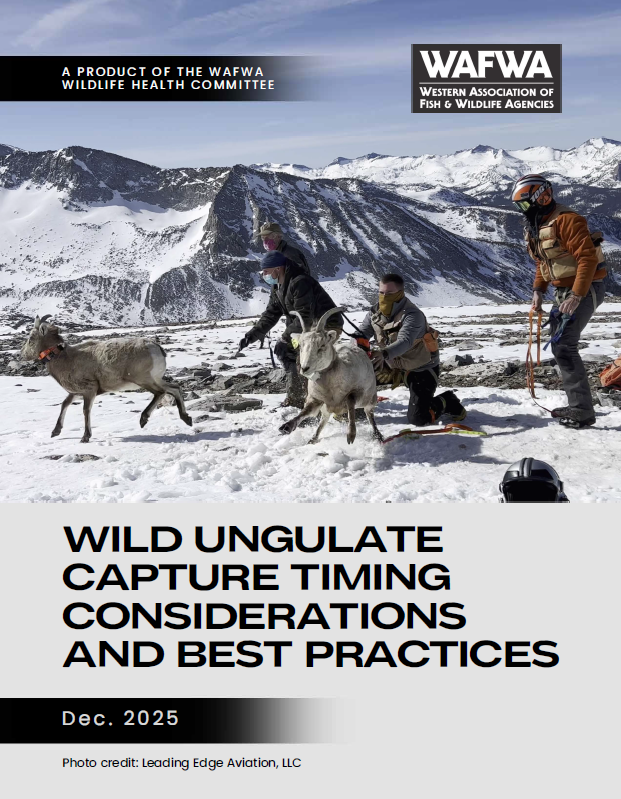
When planning ungulate captures, wildlife professionals must consider both the animals and the complex systems in which they live, in addition to logistical and financial challenges. The species, age, reproductive status, time of year, reason for capture, habitat, weather, terrain, and available resources all affect capture outcomes. The available literature on both domestic and wild animal restraint, capture, and handling provides strong evidence that they are stressors that can have significant physiological and behavioral implications for the animals involved as well as conspecifics. To minimize adverse effects during capture events, we summarize best practices to follow humane and safe principles considering animal behavior, physiology, and well-being, while building capacity for professionals to modify capture methods to address specific considerations for the animals and their habitats. If capture is necessary to research, manage, or conserve a population, a peer-supported common-sense approach that is practical and flexible and includes an adaptive learning component is critical. Coupled with effective and consistent communication, an adaptive guidance document allows for the creation of practices that support animal well-being and human safety and ensures the validity of data collected.
Attached Files

- Version: 1.2
- File Type: pdf
- Size: 3 MB