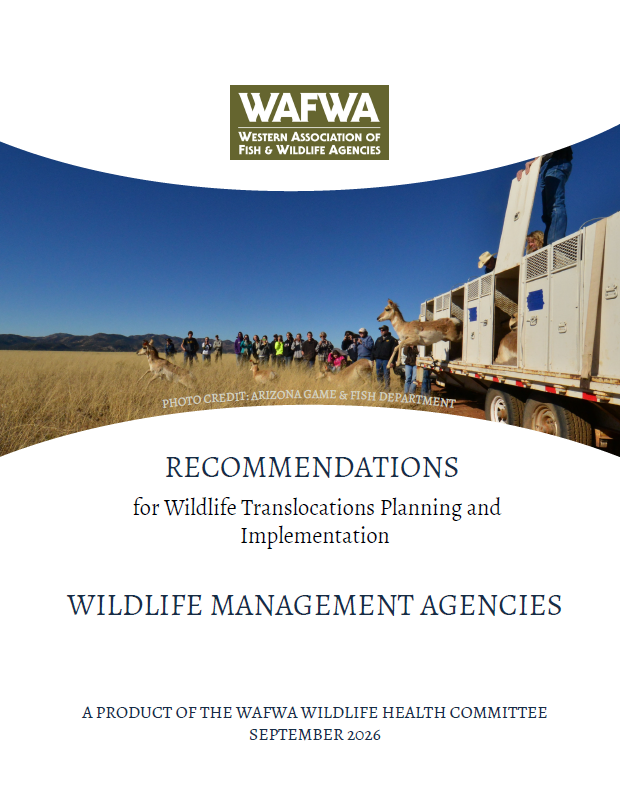
Translocation of wildlife has been used successfully by wildlife management agencies to reestablish extirpated populations, augment declining populations, introduce desirable nonnative species, restore ecological services and address human/wildlife conflict issues. Translocation has also created some ecological disasters through the introduction of invasive species, nonnative species, and pathogens and parasites that have led to habitat degradation, extirpation of local flora and fauna populations, ecosystem disruption, and disease outbreaks. Here WAFWA provides guidance and recommendations on decision making, pre-planning, risk analysis, implementation, and communication through the translocation process in order to maximize success and reduce negative outcomes.
Wildlife Health Committee, Sept 2026
Attached Files

- Version:
- File Type: pdf
- Size: 201 KB