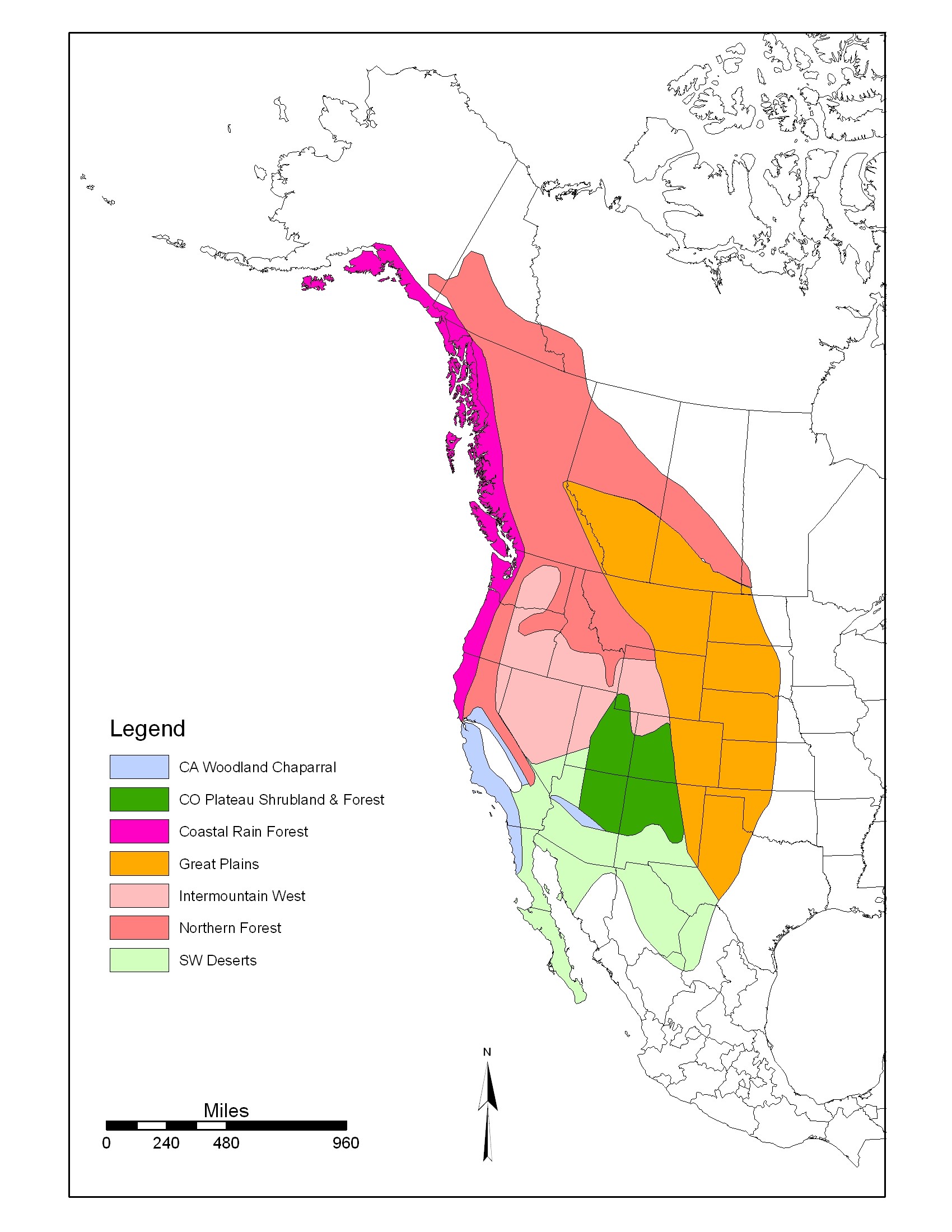
Habitat Guidelines by Ecoregion. Mule Deer (Mule and black-tailed deer) are distributed throughout western North America from the coastal islands of Alaska, down the West Coast to southern Baja Mexico and from the northern border of the Mexican state of Zacatecas, up through the Great Plains to the Canadian provinces of Saskatchewan, Alberta, British Columbia and the southern Yukon Territory. With this wide latitudinal and geographic range comes a great diversity of different climatic regimes and vegetation associations; these “ecoregions” share certain similarities regarding the issues and challenges that land managers must face. Within these guidelines the MDWG has designated 7 separate ecoregions: 1) California Woodland Chaparral, 2) Colorado Plateau Shrubland and Forest, 3) Coastal Rain Forest, 4) Great Plains, 5) Intermountain West, 6) Northern Forest, and 7) Southwest Deserts. View Ecoregion (see right).