Range-wide
MITIGATION
The Range-Wide Oil & Gas Candidate Conservation Agreement with Assurances for the Lesser Prairie-Chicken (CCAA) is a voluntary conservation strategy administered by WAFWA/SRF and permitted by the U.S. Fish and Wildlife Service (USFWS). The CCAA provides incentives for enrolled oil & gas industry participants to avoid, minimize and mitigate impacts to the lesser prairie-chicken (Tympanuchus pallidicinctus) while providing regulatory assurances regarding the effect, if any, that an ESA listing would have on their operations.
AVOIDANCE
The CCAA incentivizes the location of new oil and gas developments within areas already impacted by infrastructure.
MINIMIZATION
When avoidance is not possible, the CCAA incentivizes the location of new oil & gas developments away from high-quality habitat.
MITIGATION
When industry activities occur to LPC habitat which cannot be fully addressed through avoidance, the CCAA employs a 2:1 mitigation ratio.
EXPLORE – Shared Mitigation Resources & Tools



Accomplishments


CCAA Progress Report
Rangewide
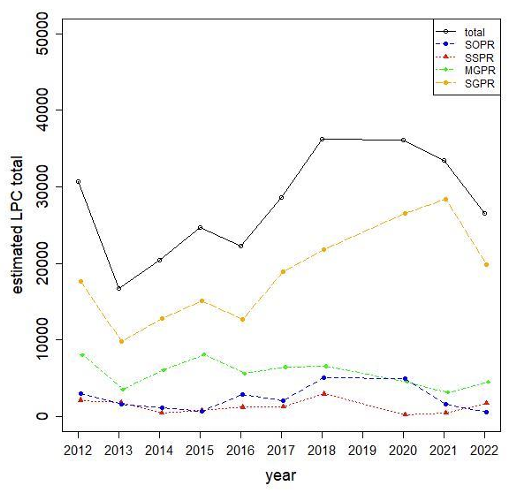
Population Estimates

build a cover pole


Business Operations
CCAA 30-year Permit
Range-Wide Oil & Gas Candidate Conservation Agreement with Assurances for the Lesser Prairie-Chicken
Range-Wide Oil & Gas Candidate Conservation Agreement with Assurances for the Lesser Prairie-Chicken
In 2014, the CCAA was approved by the Service by issue of a 30-year federal permit #TE27289B-0 that expires on 2/28/2044. WAFWA holds the permit and is the CCAA program administrator with responsibility to ensure activities under the CCAA are in-compliance with the terms and conditions, and that operations are conducted following the CCAA Business Plan (WAFWA, 2021). The business plan was recently updated with the help of third-party consultants, to identify actionable improvements and designated benchmarks for the continued success of the CCAA. This plan supersedes the one identified in the 2014 Range-wide Plan.
The Species Restoration Foundation (SRF) is a 501(c)4 nonprofit organization created by WAFWA to manage the financial operations of the CCAA. WAFWA and SRF share a principal interest in the success and governance of the CCAA by having a mutual Executive Board of Directors. The board is composed of the directors of each member agency and is the ultimate decision maker for the CCAA. Learn more about SRF.
The Lesser Prairie-Chicken Initiative Council (LPCIC) is the governing body of the CCAA, comprised of the directors, or their designee, of the five-state fish and wildlife agencies within the LPC range, to provide support and oversight of the CCAA’s administration. The LPCIC is informed by advisory committees providing a mix of expertise and experience. The LPC Program Director oversees the day-to-day operations.
2014. Range-wide Oil & Gas CCAA (PDF, 1 MB)
2014. Federal Permit #TE27289B-0 (PDF, 2 MB)
2021. CCAA Business Plan (PDF, 265 KB)
Participant Resources
Participant Resources
Mitigation Project Management
Project Submission. The CCAA online portal (https://wafwawct.org/) provides participants with live-time support to securely manage and track mitigation projects.
• 2026 Mitigation Fee & Unit Calculation (.xlsx, 104KB)
• Guide to Impact Buffers (PDF, 213 KB)
• Linear Project Submission Form (fillable PDF, 216KB)
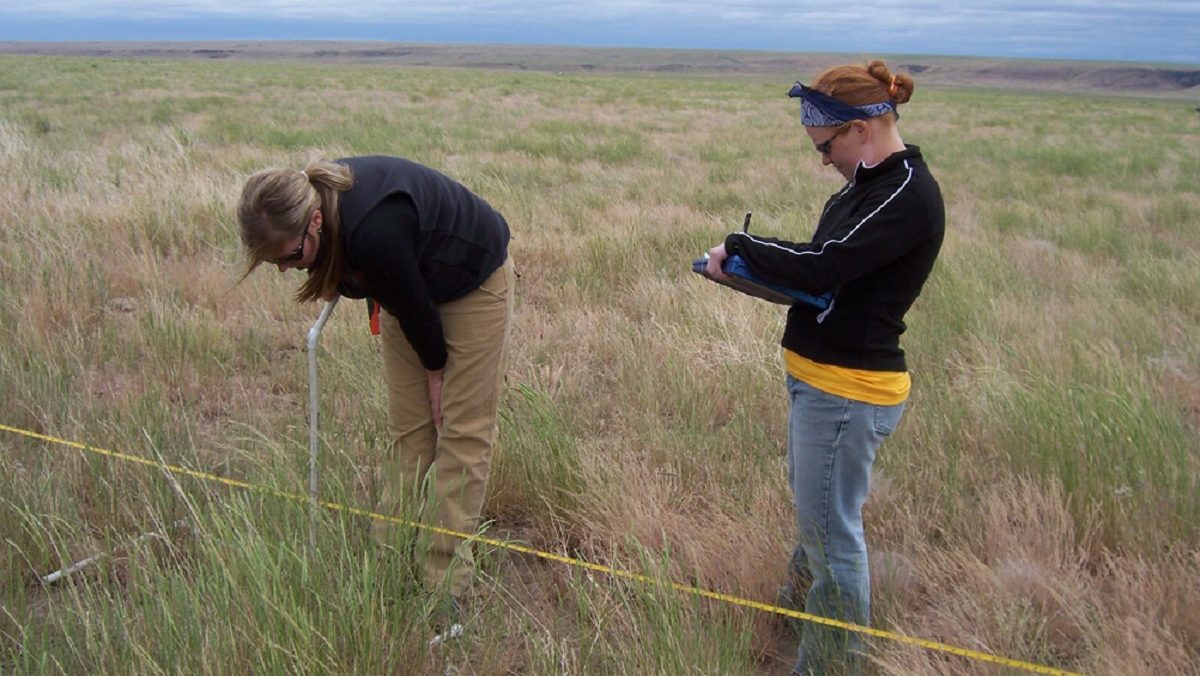
Habitat Evaluation to assess lesser prairie-chicken habitat quality at the project site and surrounding area. This field-based evaluation is used to assess project impacts to LPC and its habitat; to gauge remediation progress and success; and to evaluate and track conservation efforts through time. This evaluation is intended to be a quick assessment that can be accomplished with limited vegetation monitoring training.
• Get the WCT field app (Apple App Store)
• Habitat Evaluation Guide (HEG) (PDF, 7MB)
• Habitat Evaluation Guide (HEG), fillable (zipped .xlsm, 7MB)
• Guide Sheet: Building a Cover Pole (PDF, 806KB)
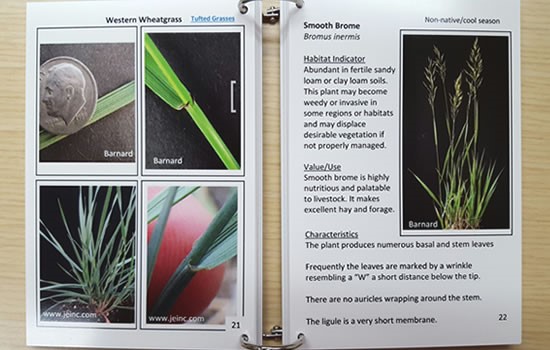
• LPC Plant Guide (PDF, 55KB)
Voluntary Remediation
The CCAA incentivizes the remediation of impacts on the landscape as a conservation measure to reduce habitat loss and fragmentation of native grasslands and prairies of the southern Great Plains.
• Benefits of Remediation (PDF, 474 KB)
• Remediation Documentation (fillable PDF, 2 MB)
Voluntary Lek Surveys
Participants have the option to conduct surveys for the presence of lesser prairie-chicken leks to inform the implementation of CCAA conservation measures.
• WAFWA LPC Lek Survey Form (ground) 2026 (PDF, 349 KB)
• WAFWA LPC Lek Survey Form (aerial) 2026 (PDF, 303 KB)
• WAFWA LPC Lek Survey Fillable Forms 2026 (Excel, 317 KB)
CCAA Requirements
Conservation Measures aim to conserve and enhance the survival of the lesser prairie-chicken and its habitat. Participants have agreed to implement these measures as a term of their CCAA agreement.
• Guide to Conservation Measures (PDF, 246 KB)
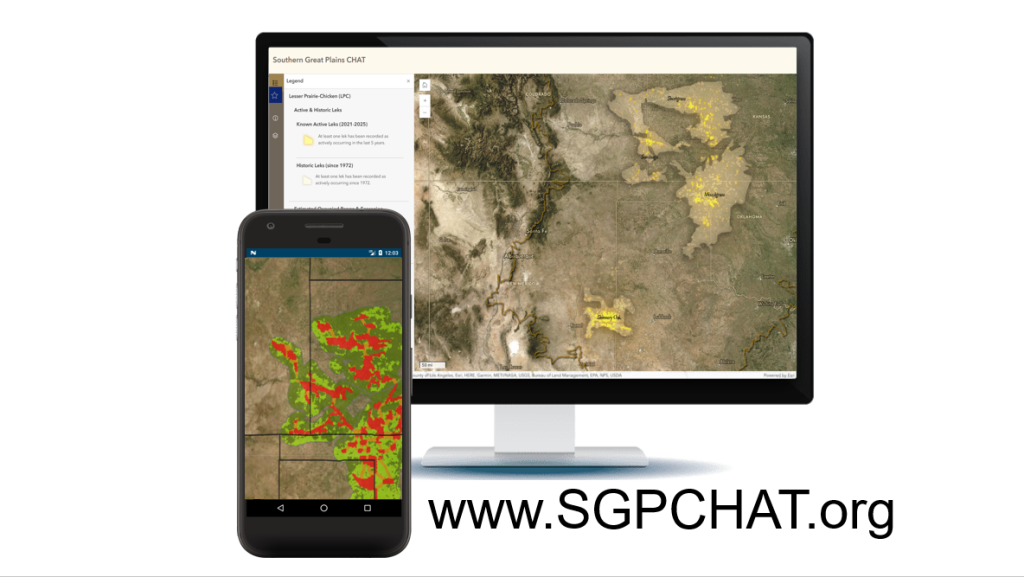
• View Known Lek Locations (www.sgpchat.org)
Project Submission. As a term of the CCAA, participants ensure that their oil & gas impacts occurring on enrolled lands are mitigated to reduce and compensate for the impact to lesser prairie-chickens.
Incident Report (due 30 days of incident) – Participants report any emergency operations that occur on potential LPC habitat during the breeding season (March 1- July 15). Reports are submitted in the CCAA online portal (https://wafwawct.org/).
Annual Reporting – Non-Emergency Operations (due Feb 15). Participants report any non-emergency activities that occur on potential LPC habitat within the prior breeding season (March 1- July 15). Reports are submitted in the CCAA online portal (https://wafwawct.org/).
Annual Reporting – Forecasted Use (due Oct 1). Participants report their intended next year’s use of the program in advance to SRF/WAFWA.
Enrollment Changes
New Enrollment. Enrollment of new companies into the CCAA is currently closed. Enrollment of new land is permitted by existing Participants. For details, please contact Chanda Pettie at chanda.pettie@wafwa.org
• CCAA Land Enrollment Form (fillable PDF, 183 KB)
Enrollment Changes. CCAA industry participants may add new lands or transfer their enrollment (lands, pre-paid enrollment fees and/or remediation credits) to another company.
• CCAA Enrollment Transfer Form (fillable PDF, 1 MB)
• CCAA Certificate of Inclusion (fillable PDF, 4 MB)
Conservation Resources
Enrollment Opportunity
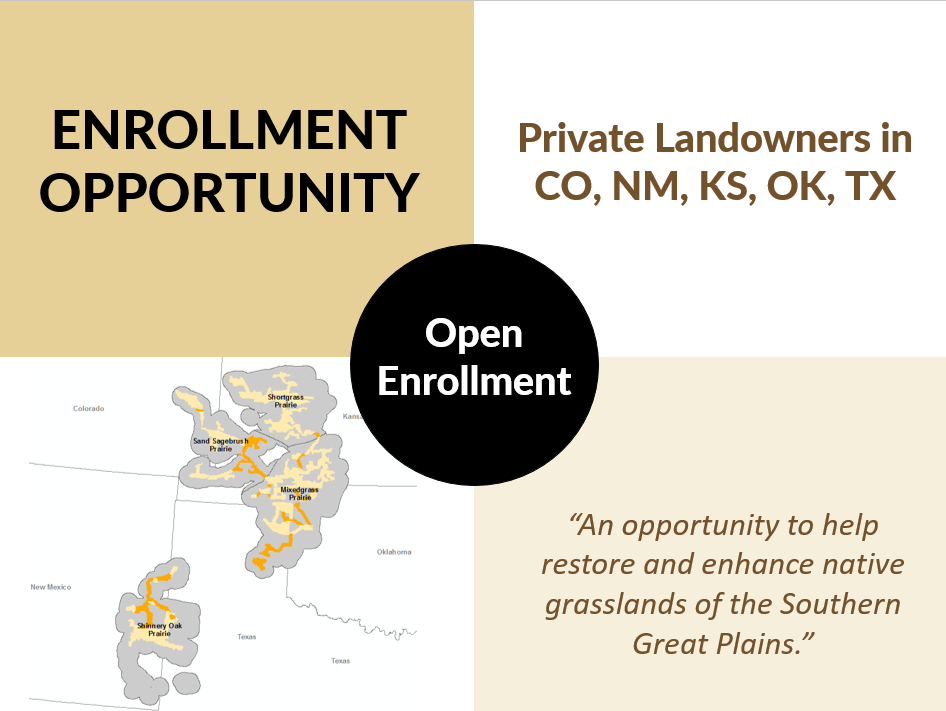
WAFWA is offering a cost-share incentive under a voluntary 10-year agreement to implement a grassland restoration plan designed specifically for your property. Restoration plans are designed to maximize habitat value while improving the long-term sustainability goals for the property. Private landowners interested in conservation that have at least 160 acres located within a Conservation Priority Area may apply!
Restoration Payment. A one-time payment upon completion of restoration activities, as defined in your plan, to cover the cost of the effort. Typically, this provides for full cost of implementing pre-approved activities. However, payment caps may be imposed.
• Enrollment Brochure (PDF, 252 KB)
• Conservation Priority Areas (www.sgpchat.org)
• Example Restoration Plan (PDF, 450 KB)
• APPLY ONLINE (3 minute survey) or Paper Application (PDF, 164 KB)
Habitat Management Resources
Conservation Measures aim to conserve & enhance the survival of the lesser prairie-chicken and its habitat. The following measures are required under the CCAA. CCAA Conservation Measures (PDF, 186 KB)
Guides to assist with Conservation Measure implementation:
Fence Visual Markers. Criteria for building and installing visual fence markers to reduce fence collisions. Fence Visual Markers (PDF, 644KB)
Stock Tank Wildlife Escape Ladders. Criteria for building and installing escape ramps to reduce wildlife mortality. Stock Tank Wildlife Escape Ladders (PDF, 1MB)
Chemical Brush Management (Shinnery Oak Prairie). Criteria for restoring/enhancing plant composition within the shinnery oak prairie ecosystem. Brush Management (PDF, 302KB)
Habitat Evaluation to assess lesser prairie-chicken habitat quality on the enrollment and surrounding area. This field-based evaluation is used to assess restoration progress and success, and to evaluate and track conservation efforts through time.
• Habitat Evaluation Guide (HEG) (PDF, 7MB)
• Habitat Evaluation Guide (HEG) (zipped .xlsm, 7MB)
• Guide Sheet: Building a LPC Cover Pole (PDF, 806KB)
• LPC Plant Guide (PDF, 55KB)
Southern Great Plains CHAT
Decision Support for Crucial Habitat Across the West
The Southern Great Plains CHAT® is a spatial, decision-support tool to help prioritize conservation efforts for the southern great plains ecoregion and for the lesser prairie-chicken. WAFWA/SRF in partnership with the state wildlife agencies worked together to provide the best scientific data.
Contact Us
Chanda Pettie
Lesser Prairie-Chicken Program Director
Western Association of Fish & Wildlife Agencies
chanda.pettie@wafwa.org
David Yoskowitz
LPC Initiative Council Chair
Director of Texas Parks and Wildlife Department
david.yoskowitz@tpwd.texas.gov