Statement of Purpose
“To provide technical guidance to agency administrations through written documents; to foster communication between those interested in wildlife health issues in the West; and to aid in efficient management of wildlife health issues through regional coordination”.
Revised/Approved July 9, 2017
Spotlight
Chronic Wasting Disease
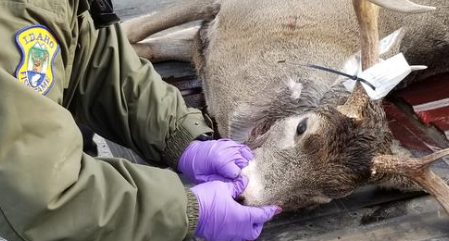
Chronic wasting disease (CWD) is an emerging infectious prion disease that affects members of the Cervidae family (“cervids”), which includes many native species in western North America, such as white-tailed deer, mule deer, elk, and moose. CWD affects free-ranging and captive cervids in 35 U.S. states, including 20 WAFWA-member states, and five Canadian provinces of which three are WAFWA members.
To protect our native North American cervid populations, wildlife agencies are trying to slow the spread of the disease and prevent introduction to new areas. WAFWA is actively involved in helping member agencies navigate this effort (LEARN MORE).
Feature Publications
Model Drug Protocol
Recommendations for the Purchase, Distribution, Use, and Disposal of Pharmaceuticals Used in Wildlife for Wildlife Management Agencies
Recommendations for the Purchase, Distribution, Use and Disposal of Pharmaceuticals Used in Wildlife for Wildlife Management Agencies
This is an update of a 2010 document providing information on laws and regulations around pharmaceuticals. It provides the requirements and ways in which agencies can meet those requirements.
A product of the WAFWA Wildlife Health Committee, June 2025.
Wildlife Translocations
Recommendations for Wildlife Translocations Planning and Implementation
Recommendations for Wildlife Translocations Planning and Implementation
Translocation of wildlife has been used successfully by wildlife management agencies to reestablish extirpated populations, augment declining populations, introduce desirable nonnative species, restore ecological services and address human/wildlife conflict issues. Translocation has also created some ecological disasters through the introduction of invasive species, nonnative species, and pathogens and parasites that have led to habitat degradation, extirpation of local flora and fauna populations, ecosystem disruption, and disease outbreaks. Here WAFWA provides guidance and recommendations on decision making, pre-planning, risk analysis, implementation, and communication through the translocation process in order to maximize success and reduce negative outcomes.
A product of the WAFWA Wildlife Health Committee, September 2026.
Guidelines for health screening and handling of galliforms
Guidelines for health screening and handling of galliforms
Upland game birds are captured and relocated within and between jurisdictions to facilitate a variety of management goals. The movement of wildlife carries the risk of transportation of pathogens to novel environments or populations; as well as the potential for naïve animals contracting disease when exposed to novel pathogens after relocation. Disease surveillance is therefore an important component of all relocation projects.
This document is designed to provide guidelines for diagnostic testing procedures that can inform management decisions, while at the same time protecting the health of wild bird flocks as well as reducing the risk of pathogen transmission to domestic poultry flocks. Although these guidelines were developed primarily for use by jurisdictions affiliated with the Western Association of Fish and Wildlife Agencies (WAFWA), some may have broader application. The gallinaceous species groups covered in this protocol are pheasants, grouse, quail, turkeys, prairie chickens and chukars.
A product of the WAFWA Wildlife Health Committee, July 2019.
Other Publications
| Title |
|---|